


|
|
|---|


Showing posts with label Mercedes Cars. Show all posts
Showing posts with label Mercedes Cars. Show all posts
Sunday, March 20, 2011

If you are a MERCEDES CAR dealer in Pakistan then please enter your business name, Address and phone numbers in comments section. So that your buyers can reach you. No matter which city you belong, if you are a whole sale dealer then please enter your particulars below MERCEDES CAR in Karachi, MERCEDES CAR in Lahore and MERCEDES CAR
Wednesday, March 16, 2011
1982-1993 Mercedes-Benz W 201 Series Cars pictures and reviews
Mercedes Benz' victory during the year of 1955Mille Milgia, the manufacturer built the Mercedes Benz SLR McLaren 722 Edition. According to the experts at the company, the name was actually based on the starting number that was given to the Mercedes Benz 300 SLR. There is something special about the Mercedes Benz 300 SLR that this vehicle was that that putted a milestone and a new wave of victory for the company when it was driven by Stirling Moss and Denis Jenkinson.


The Mercedes SL-Class features safety and comfort equipment in the form of bi-xenon headlamps, and an Intelligent Light System whose light functions are designed specifically for typical driving situations. Other new features onboard the 2009 SL 600 include AIRSCARF neck-level heating.


This system - invented by Mercedes-Benz and available as an optional extra - enhances comfort when driving with the roof down, extending the roadster season until well into the winter months. Passengers are kept informed and entertained by the standard-fit COMAND multimedia system, which has also been fully redeveloped for the 2009 model, and features additional functions.
Mercedes Benz' victory during the year of 1955Mille Milgia, the manufacturer built the Mercedes Benz SLR McLaren 722 Edition. According to the experts at the company, the name was actually based on the starting number that was given to the Mercedes Benz 300 SLR. There is something special about the Mercedes Benz 300 SLR that this vehicle was that that putted a milestone and a new wave of victory for the company when it was driven by Stirling Moss and Denis Jenkinson.
The all new Mercedes Benz SLR 722 Edition has all the qualities of an ideal racing supercar. It is refined in many respects and this lovely sporty car has more output, a tailor-made suspension configuration and an unquestionably lavishly designed interior meeting all the sports need.
The Mercedes SL-Class features safety and comfort equipment in the form of bi-xenon headlamps, and an Intelligent Light System whose light functions are designed specifically for typical driving situations. Other new features onboard the 2009 SL 600 include AIRSCARF neck-level heating.
This system - invented by Mercedes-Benz and available as an optional extra - enhances comfort when driving with the roof down, extending the roadster season until well into the winter months. Passengers are kept informed and entertained by the standard-fit COMAND multimedia system, which has also been fully redeveloped for the 2009 model, and features additional functions.
Monday, March 14, 2011

Rolf Schlepp, chief designer for the Carlsson tuning company, accentuates the coupe styling of the Mercedes CLS with a new aerodynamic package. The kit includes stainless-steel grille inserts, rear apron boasting an integrated diffuser, front spoiler, and RS front spoiler lip, the last available optionally in carbon fiber. Power boosting kits are available from Carlsson for many different CLS engines; one boosts the CLS 63 AMG twin-turbo V8 from the standard 557 PS to as much as 600 PS. The CLS 350 CDI’s power rating is boosted by as much as 20 percent by the Carlsson C-Tronic control unit, bringing it up to 780 Nm and 320 PS, an increase of 130 Nm and 55 PS over the standard model. The sprint time of the Mercedes CLS has been improved from the standard by a full 0.3 seconds, resulting in zero to one hundred kilometers an hour in only 5.9 seconds.

The guys at Carlsson brought their A-game to the Geneva Motor Show with a new version of the C25 called the Royale, based on the Mercedes SL 65 AMG. The tuning firm announced a limited run of 25 units, and the highly modified coupe already has six orders placed. These will be delivered sometime in 2011, while future orders for the C25 Royale take six months to complete and ship out. When comparing the factory Mercedes SL 65 AMG, the Royale weighs 180 kilograms lighter, and this was accomplished with the extensive use of carbon fiber, found on the hood and new roof. Other lightweight components are the full ceramic brake system, which are half the weight of the stock Mercedes SL65 AMG parts. However, the styling and weight reduction aren’t the only parts that Carlsson focused on, the performance under the hood is just as impressive as the exterior.

The German tuning company MR Car Design has released this Mercedes SL 65 AMG called the Shining Star. Based out of Erftstadt, the tuners customized the exterior of this 2005 Mercedes with a new SLR inspired carbon bonnet from Kicherer. A new rear bumper, black fender lights, and mid-mounted rear brake were also installed for a personalized look. It now rides on shiny chrome 20-inch forged rims from Carlsson, and MR Car Design performed some tuning under the hood next. With new software tweaking the ECU, the Mercedes SL 65 AMG gained 80 PS and 110 Nm of torque to the factory output of 612 PS and 1,001 Nm of torque. This lightweight Mercedes can now be classified as a tuners dream with those figures.

Here is another unique tuning job performed by the guys at Mansory on theMercedes SLS AMG. The supercar turned out much different in terms of styling compared to the factory model. Called the Cormeum, an odd name for a car I say, the style of this Mercedes is signed by Kourosh Mansory, the head designer and owner of the tuning company. The mods are extreme, and include new headlights similar to the Ferrari 599, a new front spoiler, larger air intakes, and F1 inspired front end. Several brake air ducts made their way into the body lines, while a rear spoiler fitted with a large air diffuser rounds out the rear. The world renowned tuners didn’t stop with just the exterior, however they boosted the power figures equally.

The tuning firm Piecha Design has released a new program for the Mercedes ML called the Evorian RS. This kit also fits the GL-class X164, and consists of a front spoiler with integrated LED daytime running lights, new side skirts, chrome aerowings, and a rear diffuser. Exhaust sound and performance was improved with a Quadro-4-tube exhaust system and dual chrome plated exhaust tips. For the wheels and suspension on the Mercedes ML, Piecha hooked it up with new rims and tires, and a H&R coilover suspension kit to lower the ride height 35 mm in the front, and 50 mm at the rear. Performance tuning features a Power Converter Intermedia RC, to improve the acceleration and response time of theMercedes ML pedal at low speeds.
Thursday, March 10, 2011

 |
| Mercedes Benz SLR Mclaren |
 |
| Mercedes Benz SLR Mclaren |
 |
| Mercedes Benz SLR Mclaren |
 |
| Mercedes Benz SLR Mclaren |
 |
| Mercedes Benz SLR Mclaren |
 |
| Mercedes Benz G Class 2012 |
 |
| Mercedes Benz G Class 2012 |
 |
| Mercedes Benz G Class 2012 |
 |
| Mercedes Benz G Class 2012 |

Mercedes-Benz secured military contracts for the vehicle in the late 1970s and offered a civilian version in 1979. A major reason to start development was the need of the German Army for a light military vehicle. Without any joint test the cheaper Volkswagen Iltis were chosen, but since 1990 it is replaced by the G-Class "Wolf" and LAPV Enok. After a design change to a civilian cross-country vehicle in co-operation with the Austrian car manufacturer Steyr-Daimler-Puch, production of the G-Class began in 1979 with the 460 Series models.The G-Class has been sold under the Puch name in certain markets, and the Peugeot P4 is a variant made under license, with a Peugeot engine and different parts.

2006 Mercedes-Benz G-Class. In July 2006, Mercedes-Benz announced a late-availability 2006 model year G-Class on its website.
2007 Mercedes-Benz G-Class. The company showed a facelifted 2007 model at the Paris Auto Show in September 2006 and increased the power of the G55 AMG version from 476 to 500 hp (370 kW). Mercedes-Benz at the same time also announced that it will continue to manufacture the G-Class through 2015 on the continuing demand worldwide for the model by military and civilian buyers.
2008 Mercedes-Benz G-Class. Minor upgrades.


The Ultimate G - The 2009 Mercedes-Benz G55 G V12 S Biturbo The world’s most powerful G off-roader is modified by the tuner BRABUS. It is built on the latest Mercedes G-Class. The SUV is powered by a BRABUS SV12 S displacement engine. Like all special models of BRABUS - recognized by the German Vehicle Registration Agency as a vehicle manufacturer - the BRABUS G V12 S Biturbo comes with a comprehensive luxury package. The ultra-powerful 4×4 starts at 379,000 Euros.
The BRABUS SV12 S engine is based on the V12 Bi-turbo engine from Mercedes S 600. Before being implanted in the engine bay of the G-Class, displacement of the three-valve per cylinder engine is increased from 5.5 to 6.3 liters (336 to 384 cubic inches) using a special crankshaft with longer stroke, larger cylinders and larger bore. In addition, the cylinder heads are re-machined and fitted with revised camshafts.
Manufacturing contracts with Daimler AG have been renewed for the continued production of Mercedes-Benz's G-Class at Magna Steyr's facilities in Graz, Austria, until 2015. The G-Class is produced in three, five-door, convertible and in custom versions. The Magna International division in Graz has made about 200,000 vehicles over 30 years.
 | |
| Manufacturer | Mercedes-Benz |
|---|---|
| Production | 1979–present |
| Assembly | Graz, Austria |
| Class | Mid-size sport utility vehicle |
Wednesday, March 9, 2011
The second generation of CLS begins not as quiet as the first. While the first CLS has created a new segment, the second generation will debut before the public with the new Audi A7 and already has a rival from Porsche. The guys from BMW are expected to launch a competitor, but the guys from Mercedes are confident on CLS.

Friday, January 28, 2011
 |
| Mercedes Benz Vito Van |
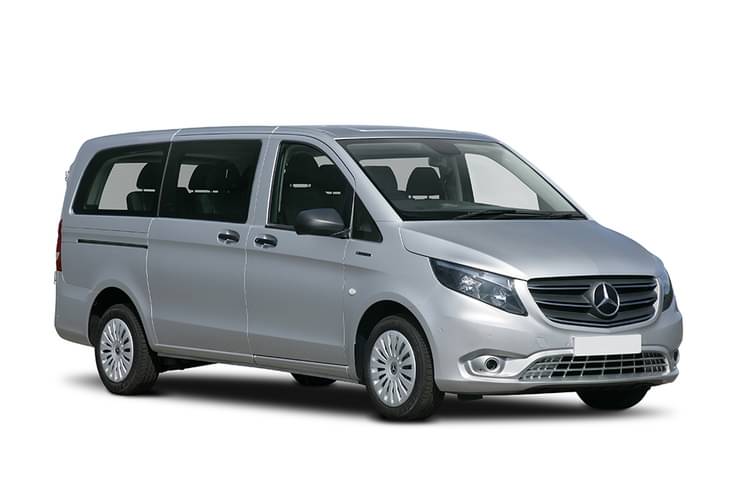 | ||||||||||||||||||||||||||||||||||||||||||||||||||||||||||||||||||||||||||||||||||||||||||||||||||||||||||||||||||||||||||||||||||||||||||||||||||||||||||||||||||||||||||||||||||||||||||||||||||||||||||||||||||||||||||||||||||||||||||||||||||||||||||||||||||||||||||||||||||||||||||||||||||||||||||||||||||||||||||||||||||||||||||||||||||||||||||||||||||||||||||||||||||||||||||||||||||||||||||||||||||||||||||||||||||||||||||||||
The Australian introduction of the Mercedes-Benz Vito van range in 1998 saw a new set of standards established for the hotly-contested one-tonne van market. Since then more than 11,700 Australian customers have made the award-winning Vito their van of choice for business, leisure or both. With the present model entering its fourth year, the Vito embodies all of the characteristic engineering, safety and comfort the three-pointed star is famous for. This popular one-tonne van range starts 2007 with a host of enhancements and revisions. In line with the all-new Mercedes-Benz Sprinter van range, launched in Australia late last year, the Vito now boasts an even more impressive catalogue of features, as well as the addition of a new member to the family: the Vito 120 CDI. Now the most powerful one-tonne van available in Australia, the range-topping Vito 120 CDI brings 150 kW of power and 440 Nm of torque to Australian van customers whilst offering outstanding performance and economy, all in addition to its extensive equipment list. The entire Vito range sees greater power, efficiency and safety for 2007. For example, the entry-level 109 CDI has grown from 65 kW/220 Nm to 70kW/250 Nm. In terms of engine emission cleanliness, all engines in the Vito range are EU4-compliant. Also, from 2007, all Vito models are equipped as standard with the latest-generation Electronic Stability Programme (ESP®) known as ADAPTIVE ESP®. This brilliant safety feature takes into consideration the mass and the centre of gravity of the vehicle when in operation and made its Australian debut in the all-new Sprinter last October. On top of these new features, all models including the Crew Cab and Vito Wagon enjoy air-conditioning as standard equipment. Extensive range of models The Vito range is comprised of the Compact Vito, the Long Vito with High Roof and the Extra-Long Vito. There are two wheelbases (3,200 mm for the Compact and Long with High Roof, 3,430 mm for the Extra-Long), three lengths (4,748 mm for Compact, 4,993 mm for the long with High Roof and 5,223 mm for the Extra-Long). A GVM rating of 2,940 kg across the Vito range provides a wide range of solutions for the load carrying needs of customers. The Vito panel van range covers virtually all possible applications – the Compact, the Long Vito with High Roof and the Extra-Long offer load volumes of 4.65 m3, 6.49 m3 and 5.68 m3 respectively. The versatile Crew Cab (available with the proven 109 CDI and 115 CDI engines in either Compact or Extra Long bodies) not only offers seating for up to six occupants but 3.65 m3 load space, as well. Up to 1,712 mm of loading length is available behind the second row of seats and even more cargo space is available with the second row removed. The Vito Crew Cab is fitted with seating for five people as standard, with a bench-style front seat for three people optionally available, thereby making it a full six-seater. The stylish Vito Wagon brings versatility and Mercedes-Benz comfort to the people-mover segment. Available with the proven 115 CDI turbo diesel engine in a long body configuration, the 8-seater Vito Wagon (two individual front seats with two rows of three seats behind) is optionally available with a bench-style front seat for three people, bringing comfort to a maximum of 9 people at any one time. The two rows of rear seats can be folded down to make a perfectly flat floor area. Heading the 2007 Vito range is the new Vito 120 CDI. Sporting the same 3.0-litre turbo diesel V6 from the German auto maker’s passenger car range, the Vito 120 CDI brings 150 kW of power and 440 Nm or torque to the market, making it the most powerful one-tonne van in Australia. The 120 CDI is available in either a Vito Van or Crew Cab, fitted with the Extra Long body. This V6 powerhouse does the 0 - 100 km/h sprint in 8.3 seconds and can still achieve an amazing fuel economy rate of 9.2 litres per 100 km. Setting a new standard in power, torque and efficiency, the Vito 120 CDI offers a long-awaited alternative to the performance utility market, adding the advantage of lockable security with large volume to a stylish and powerful package. The 120 CDI makes a strong value proposition. In comparison to the 115 CDI, the 120 CDI gains 17-inch light-alloy wheels, colour-coded bumpers, leather steering wheel and gear knob and dark tinted windows on the Crew Cab model. This is in addition to the greater than 30% additional power and torque from the impressive V6 engine and all for a small premium of only $3,280 (RRP). The 119 Petrol engine is no longer available. As with the new Mercedes-Benz Sprinter van range, the Vito range comes with a class-leading 3-year / 200,000 km new vehicle warranty and 24-hour road-side assistance for three years from first registration. Three powerful high-tech diesel engines make light work of all tasks The 2007 Vito range starts with the proven 109 CDI 4-cylinder turbo diesel engine. Output for this unit grows from 65 kW to 70 kW coupled to torque output of 250 Nm, an impressive 13 percent increase over the previous 220 Nm. The impressive 115 CDI power unit is also a 2.2-litre 4-cylinder turbo diesel engine but employs two-stage turbo charging, producing an output of 110 kW and 330 Nm of torque (between 1,800 and 2,400 rpm). Rounding out the engine line-up is the range-topping 120 CDI power unit. Producing an impressive 150 kW of power and 440 Nm of torque (between 1,800 – 2,400 rpm), this 3.0-litre V6 engine (which utilises a 72-degree vee-angle) hails from the Mercedes-Benz passenger car range, where its impressive performance has been enjoyed in both the E-Class saloon and the ML-Class. This engine, known as the OM 642, is all-alloy unit employing both double-overhead camshafts and multi-stage turbo charging to assist in achieving its impressive output figures. This milestone engine is mated to a smooth 5-speed fully-automatic transmission. With the active service ASSYST programme the 2007 Vito can go up to 30,000 km – equivalent to once round the world – on one oil change. The diesel engines in the Vito range employ Common Rail Direct Injection technology (CDI) as well as intercooling for the incoming fuel/air mixture. All diesel engines in the 2007 Vito range comply with EU4 emission regulations. Extensive list of standard equipment; optional features to suit individual needs Benchmark levels of standard equipment also characterise the 2007 Vito range.  The steering wheel is also standard with tilt and telescopic adjustment, making the ideal driving position even easier to achieve. Optional equipment adds even more flexibility and choice for customers. The Vito van range and Crew Cab can be optioned with a host of features, including 16” alloy wheels (not available on the 120 CDI), full window pack, rear barn doors and a combined cruise control/speed limiter, known as SPEEDTRONIC. Topping the list of clever features is the availability of dual electric sliding doors for the Vito Wagon, as found on the luxurious Mercedes-Benz Viano. Other features available for the Vito Wagon include electric tilting/sliding glass sunroof, PARKTRONIC parking assistance sensors and a comfort passenger bench seat for the front, allowing up to 9 people to enjoy the Vito Wagon at any one time. Chassis dynamics further enhanced with standard-fitment ADAPTIVE ESP® – the system that calculates payload and centre of gravity The rear-wheel-drive chassis of the Vito is designed to cope with high engine power and large payload variations. The rear-wheel-drive arrangement offers huge advantages for a van’s dynamic handling properties, safety and manoeuvrability. For 2007, all Vito models are equipped as standard with a new-generation Electronic Stability Programme (ESP®) known as ADAPTIVE ESP®. In addition to the usual parameters, this system is now also able to incorporate two critical factors: mass and centre of gravity. This and other new functions allow ADAPTIVE ESP® to intervene with even greater sensitivity and precision in critical driving situations. The ADAPTIVE ESP® system includes a self-learning algorithm which calculates vehicle mass and centre of gravity based on parameters such as acceleration, speed, accelerator pedal position and brake pressure, along with other measures. This allows ADAPTIVE ESP® to react more precisely to critical driving situations – for example when cornering near the limit. ADAPTIVE ESP® also provides more precisely controlled braking and setting off on surfaces where the available tyre grip varies on different sides of the vehicle. The extended functionality of the new ADAPTIVE ESP® includes systems like Roll Over Mitigation (ROM), Roll Movement Intervention (RMI) and Understeering Control (USC). ROM detects critical lateral acceleration when cornering and reacts by reducing engine torque and by increasing braking pressure at the relevant wheels. The system is activated in risk situations such as cornering at excessive speeds on motorway exit roads. RMI enhances the effectiveness of ADAPTIVE ESP® by means of engine and braking intervention in dynamic situations such as sudden evasive manoeuvres. USC provides enhanced stability under heavy understeer, ensuring that the front pushes less wide on corners – for example when driving quickly through tight bends. All Vito models are equipped as standard with 16-inch wheels, which allows larger-diameter brake discs to be fitted. Ventilated disc brakes are fitted at the front (300 mm diameter) and solid discs are fitted at the rear (diameter 296 mm) on all models. Four-wheel independent suspension is fitted to all models in the Vito range. McPherson struts with stabiliser are fitted at the front whilst the rear suspension employs coil springs with shock absorbers. The core value of safety A cornerstone of the famous three-pointed star is the level of safety all Mercedes-Benz vehicles offer. The 2007 Vito range builds on the already-impressive thinking and features that make the Vito one of the safest light commercial vehicles available on the market today. In addition to the Vito’s safety body, which incorporates high-strength load-bearing members, a raft of safety features maximise occupant safety. A driver’s airbag is fitted as standard equipment on the Vito van range, with a passenger airbag fitted as standard equipment in the Vito Wagon. Three-point seat belts are fitted for all seats, with pre-tensioners fitted for the driver and front passenger. Seat belts are height adjustable, as well. Headlight beam control, front and rear halogen fog lamps and height adjustable head restraints are also fitted as standard equipment. A rear centre stop lamp and seatbelt warning lamps are also added. The pioneering standard-fitment ADAPTIVE ESP® incorporates several equally-impressive safety features, all of which are at the ready for situations you least expect. Anti-lock braking (ABS), acceleration skid control (ASR), electronic brake force distribution (EBD) and brake assist system (BAS) all combine to shorten stopping distances as well as maintain control in emergency situations. Load restraint, too, has received close attention. Sturdy load-securing rings are standard, in the panel vans. Pricing – effective 1st January, 2007 Vito Vans - RRP* 109 CDI Compact 6-Speed Manual - $38,700 109 CDI Long High Roof 6-Speed Manual - $43,060 109 CDI Extra Long 6-Speed Manual - $41,780 115 CDI Compact 5-speed Automatic - $46,540 115 CDI Long High Roof 5-speed Automatic - $50,430 115 CDI Extra Long 5-speed Automatic - $49,260 120 CDI Extra Long 5-speed Automatic - $52,540 Vito Crew Cab - RRP* 109 CDI Compact 6-Speed Manual - $42,740 109 CDI Extra Long 6-Speed Manual - $45,460 115 CDI Compact 5-speed Automatic - $50,220 115 CDI Extra Long 5-speed Automatic - $52,940 120 CDI Extra Long 5-speed Automatic - $56,270 Vito Wagon (8-Seat) - RRP* 115 CDI Long 5-speed Automatic - $57,950 * Recommended Retail Price only. Does not include dealer delivery and statutory charges. Mercedes-Benz Vito 109 CDI Van
Mercedes-Benz Vito 115 CDI Van
Mercedes-Benz Vito 120 CDI Van
|
 |
| Mercedes Benz Vito Van |
 |
| Mercedes Benz Vito Van |
 |
| Mercedes Benz Vito Van |
Subscribe to:
Posts (Atom)


